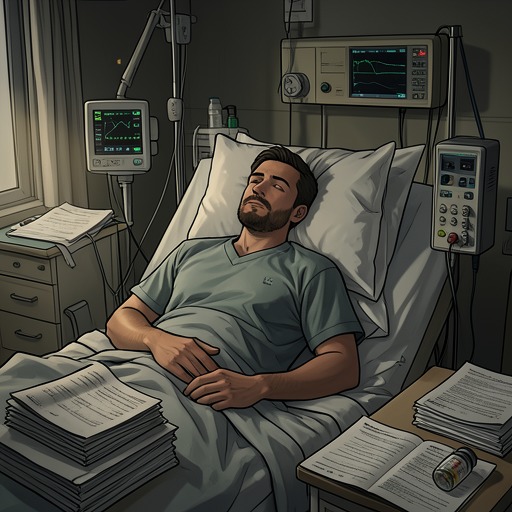
Elaine Ross
The Brass VerdictElaine Ross, whom Michael Haller calls Lanie, is a vulnerable figure in his personal circle whose apparent relapse becomes the occasion for an urgent late-night intervention. She is not shown directing the events around her: instead, she is found impaired on Mulholland Drive, and Haller’s effort to keep her from being booked takes him away from home under circumstances that later invite scrutiny.
Identity and Background
The evidence gives little biography for Elaine beyond her connection to Haller and the precarious circumstances surrounding her recovery. A friend allows her to live rent-free in a converted garage guesthouse near Fryman Canyon. The arrangement establishes that she has somewhere to stay, but also that her housing depends on another person’s generosity; the text supplies no further account of her work, family, or earlier history.
Haller knows her personally and recognizes her by the familiar name Lanie. When a caller asks whether he knows Elaine Ross, he confirms that he does and immediately asks what has happened. Her possession of his card makes it possible for the police officer who encounters her to contact him. The exchange establishes familiarity and concern, but does not specify the nature or history of their relationship beyond that personal connection.
Apparent Relapse and Police Contact
Late at night, Los Angeles police officer Randall Morris tells Haller that Elaine is on Mulholland Drive and should not be driving. Morris reports that she passed out after handing over Haller’s card. The account comes to Haller through the officer; Elaine is not shown describing what happened herself. The episode is therefore defined by the immediate facts available to Haller—her apparent incapacity and the risk of her driving—rather than by an explanation of how she came to be there.
The call confirms a fear Haller already has: he understands Elaine to have fallen back into addiction. That interpretation is consequential, but the passage does not establish the substance involved or provide Elaine’s own account. Haller anticipates that an arrest could return her to jail and rehabilitation, making the prospect of police custody more than a practical inconvenience in his eyes. His concern is for the effects another booking and treatment stay might have on someone whose recovery appears fragile.
Haller’s Intervention
Haller responds by asking where Elaine will be taken and arranging to go to her. He tells the caller he will arrive in less than fifteen minutes. Because her guesthouse is only a few blocks from the Fryman Canyon area, he plans to take her home, then return on foot for her car. His stated purpose is to spare her booking and keep the vehicle from being towed. The plan is practical and immediate: get Elaine safely back to her lodging, while resolving the car problem afterward.
The episode also shows how readily Haller accepts personal responsibility when someone he knows is in trouble. He leaves home and drives up Laurel Canyon to Mulholland Drive, where the officer says Elaine is waiting. In a later explanation to Harry Bosch, Haller recounts that someone claiming to be a police officer had called about a woman he knew personally and said he could prevent her from being booked by driving her home. Bosch confirms that the department has an officer named Randall Morris, assigned to gang detail in South Bureau. That check confirms the existence of an officer by that name, but does not, in the available account, resolve who made the call or why Haller was summoned.
Narrative Role and Limits
Elaine’s brief appearance brings Haller’s private concern into the same narrative space as a potentially consequential police contact. The reader sees her through reports delivered by others and through Haller’s response: she passes out, hands over his card, and becomes the reason he goes to Mulholland Drive. The distinction matters. The episode supports Haller’s belief that she has relapsed and his decision to help, but does not establish what Elaine knew about the call, whether she requested his assistance, or whether she had any part in arranging the encounter.
Her role is thus both personal and circumstantial. Elaine’s vulnerability gives Haller a credible reason to leave home and makes his intervention consistent with his concern for her; the unexplained means by which he is contacted leaves a question around the encounter without answering it. She is not presented as an investigator or as a participant in Haller’s legal work. Instead, her appearance reveals how a personal bond and the fear of renewed addiction can pull him into action even when the circumstances around that action are not fully clear.